
ACTOR at ManiFeste 2019
ACTOR at ManiFeste 2019
ACTOR scholars and artists introduced the project to a French public in June 2019 with “Orchestration and the ACTOR Project,” a study day hosted by the Paris research center IRCAM (Institut de recherche et coordination acoustique/musique) as part of the June 2019 ManiFeste-2020 festival. Our audience included young composers and performers participating in the ManiFeste Academy as well as IRCAM researchers, professional musicians, and a more general public of concertgoers and music lovers following the festival’s concerts and talks.


More videos on the Timbre and Orchestration Resource
Amit Gur (Antwerp University) — Form and Material in Visual and Auditory Perception
Benjamin Lavastre (McGill University) — Orchestration and timbre writing challenges in mixed music with digital musical instruments: Case study of Instrumental Interaction V for 3 Karlax and ensemble
Kelsey Lussier (McGill University) — Identifying Orchestrational Norms and Trends in Funk Grooves
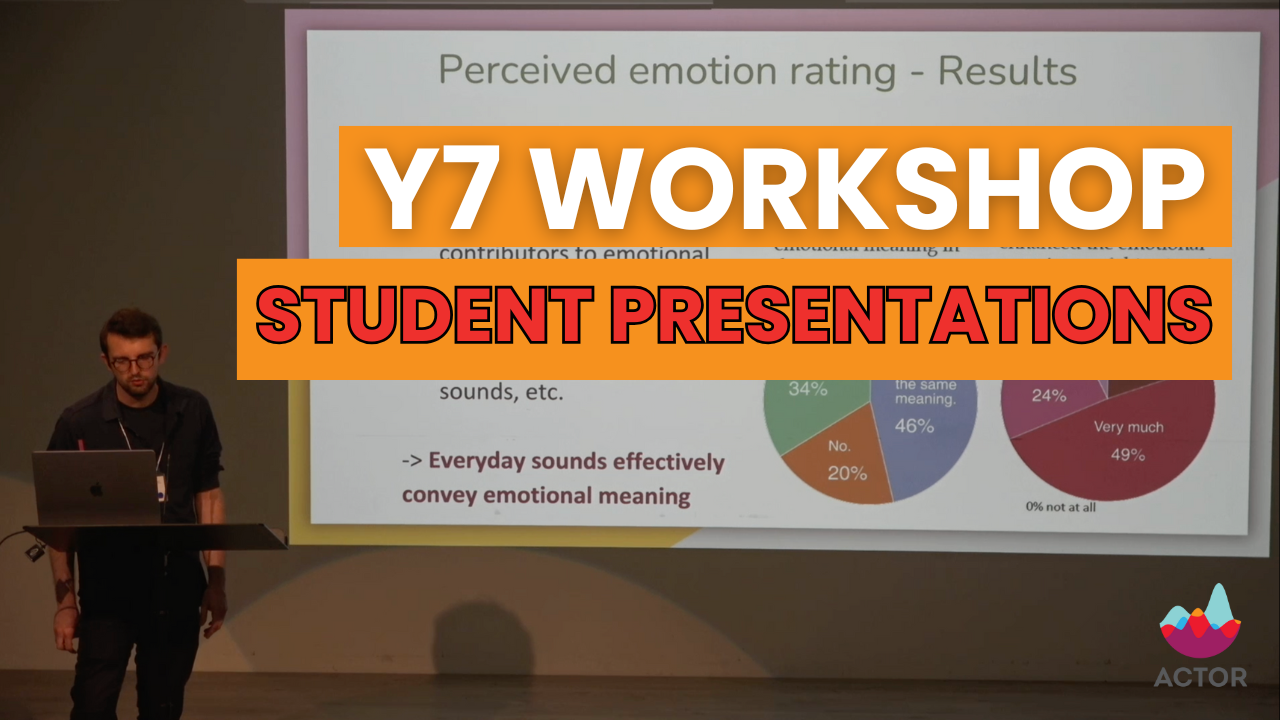
Jonas Régnier (McGill University) — Everyday Sounds as Emotional Catalysts: A Research-Creation Study in Contemporary Music
Joshua Rosner (McGill University) — To Be or Not to Bop: How Phonetics and Timbre Shape Rhythm and Phrase in Scat Singing
Shanghai Nights: The Cultural Politics of Vocal Timbre in Chinese Popular Music, 1930–49 | Annie Liu (University of Oregon)
An experimental framework for computer assisted orchestration | Francesco Maccarini (Université de Lille)
Intersections of Timbre and Structure in Nigerian Music: A Case Study of Akwu-eche-enyi | Chidi Obijiaku (University of Witwatersrand)
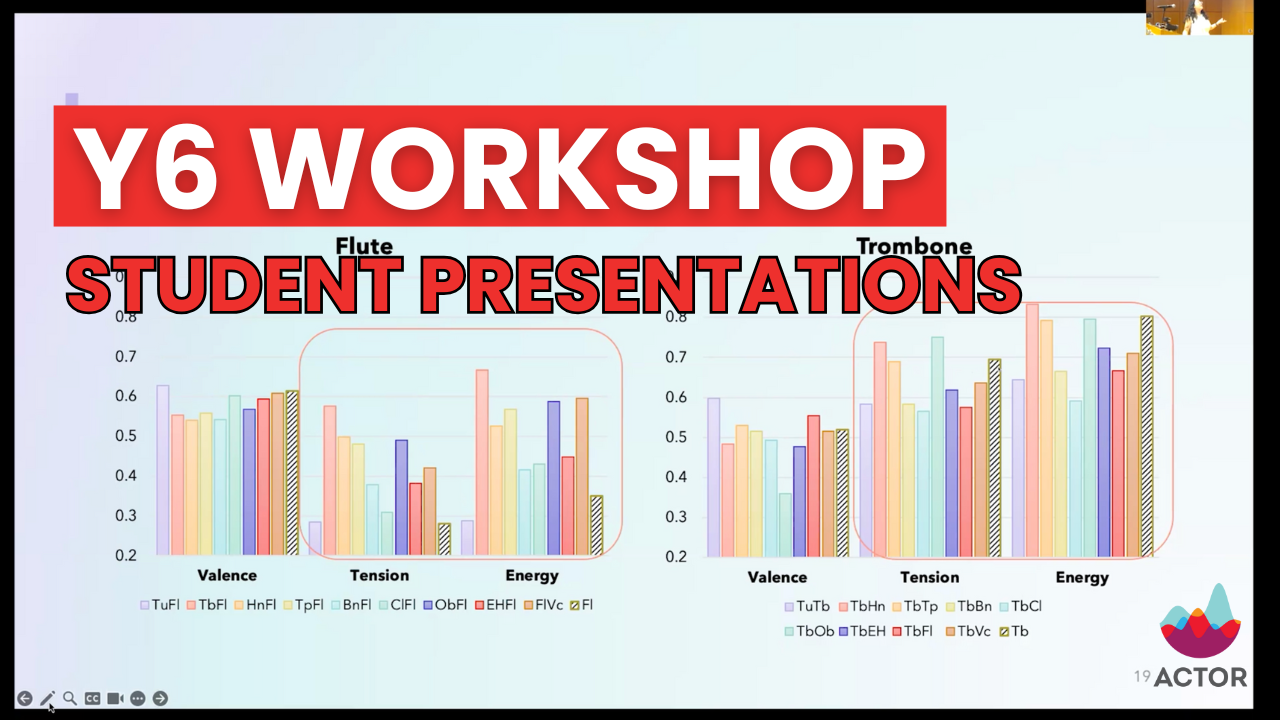
Affective Qualities of Sustained Instrumental Blend | Yifan Huang (McGill University)

Ayò Olúrántí is a composer, conductor, organist, and music theorist specializing in pre-colonial Yorùbá music and culture. He has published research on tonality of African languages, polyrhythm in African pianism, intercultural music composition, and orality as a compositional technique.

Minister, musician, and musicologist Braxton D. Shelley is a tenured associate professor of music, of sacred music, and of divinity in the Department of Music, the Institute of Sacred Music, and Yale's Divinity School. A musicologist who specializes in African American popular music, his research and critical interests, while especially focused on African American gospel performance, extend into media studies, sound studies, phenomenology, homiletics, and theology.


This talk will consider how the timbre of string band music has been racialized through the legacy of blackface, while recovering some of the performed histories (past and present) of Black string band musicians.

Orchestration is a tricky business. How do composers take a simple melody and harmony and spin it into an orchestrated web of multitudes of instruments? What techniques are available, and what effects do they achieve?

Timbre is a pretty complicated concept when it comes to the sound of the singing voice. The way we perceive vocal timbre has much to do with our visual perception of the vocalist's appearance. What perceptual biases are entwined in this process, and how can we combat them?
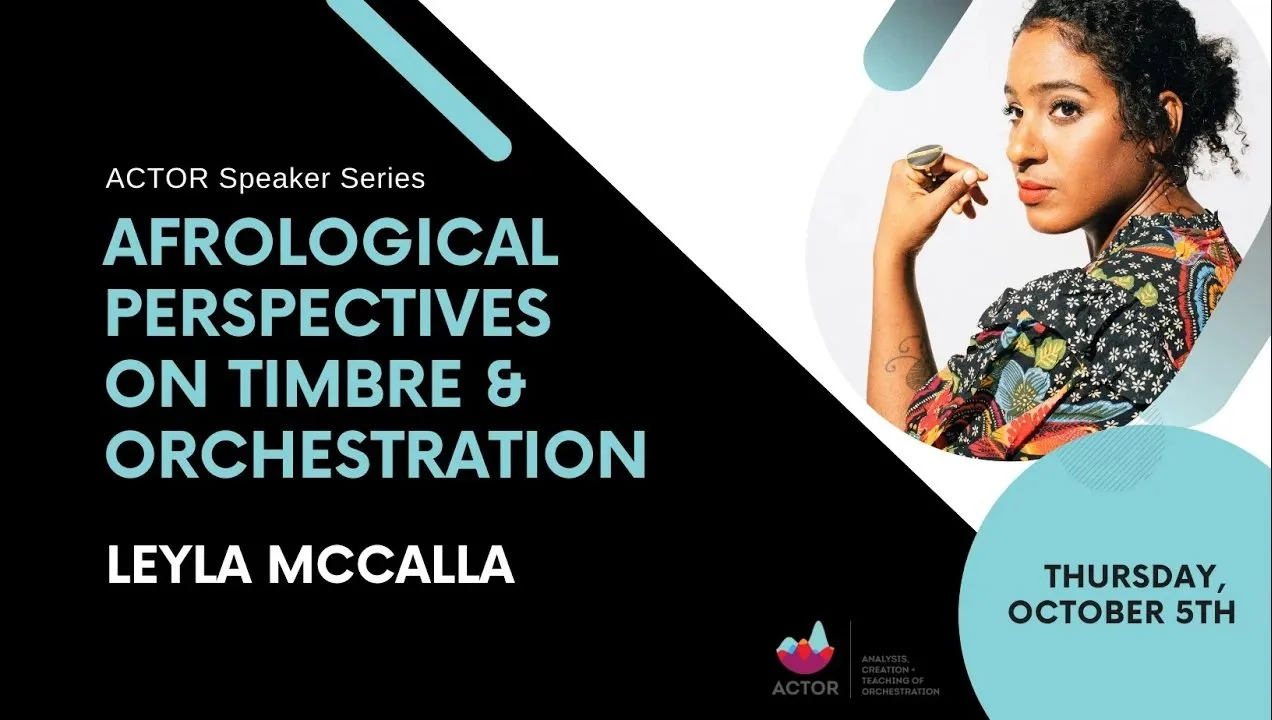
Combining original compositions and traditional Haitian tunes with historical broadcasts and contemporary interviews, Leyla McCalla’s remarkable new album, Breaking The Thermometer, offers an immersive sonic journey through 50 years of racial, social, and political unrest as it explores the legacy of Radio Haiti—the first radio station to report in Haitian Kreyòl, the voice of the people—and the journalists who risked their lives to broadcast it.

Ever wonder how Weezer's cover songs sound nearly identical to the originals, yet unmistakably like Weezer? EduFilm 4 explores this question, and the answer, naturally, has something to do with timbre.

In EduFilm 3 we explore the roles of timbre and culture in determining how we respond to the music we love.

The role of timbre in source identification in atypically combined excitations and resonators of musical instruments | Erica Huynh (McGill University)
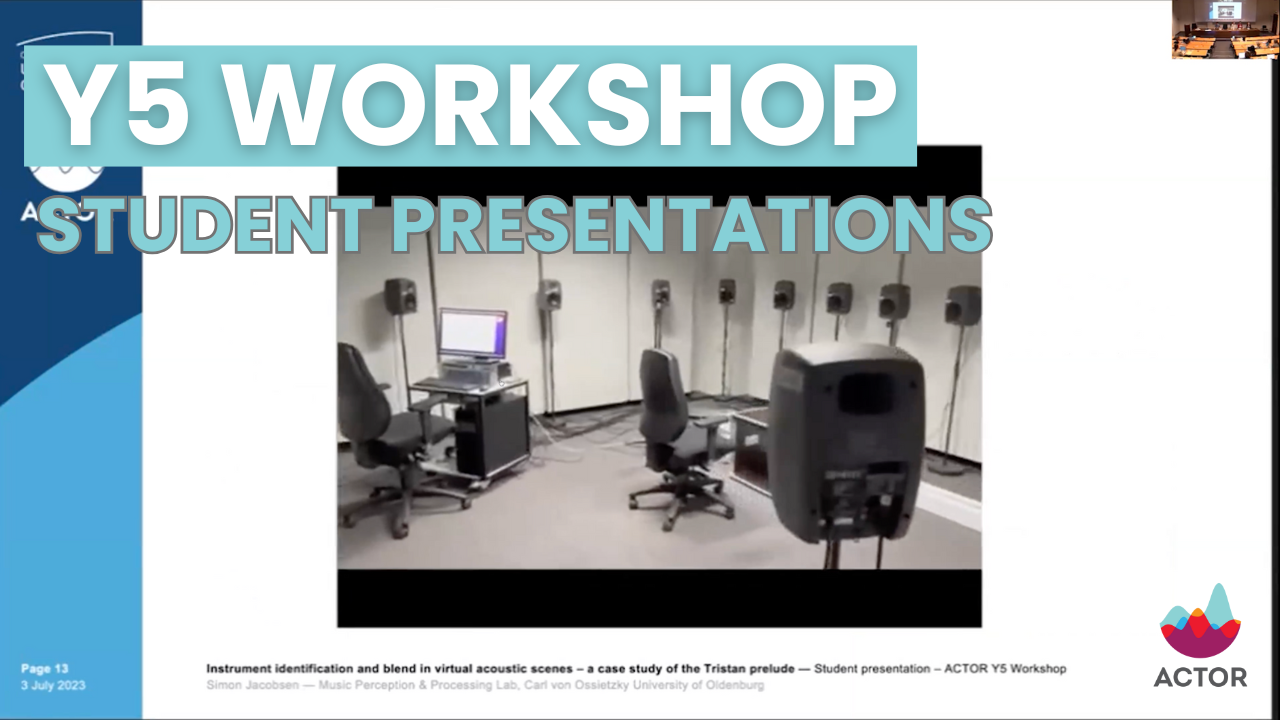
Instrument identification and blend in virtual acoustic scenes - a case study of the Tristan prelude | Simon Jacobsen (University of Oldenburg)
Choreographing Orchestration: A Novel Method for Analyzing Orchestration through Ballet | Rebecca Moranis (CUNY Graduate Center)
The Voices of Ancestors: Vocal Timbre Descriptors in Zambian Luvale Makishi Masquerade | Jason Winikoff (UBC)
Comparison of perceived and imagined instrumental blend | Linglan Zhu (McGill University)

Joel LaRue Smith is a pianist, composer, arranger, and educator who seamlessly combines jazz, classical, and Afro-Latin music traditions. He has toured the world extensively and performed alongside artists such as Tito Puente, Ellis Marsalis, Kenny Burrell, Mario Bauza, Junior Cook, and Wayne Andre.

Andile Khumalo is a senior lecturer in music theory, orchestration, and composition at Witwatersrand University in Johannesburg. His compositions are influenced by jazz, different African musics (e.g., the Amhara people, the Nguni people of South Africa, the Amadinda from Uganda), French spectralism, and more.

Finding Consilience in The Vibrato Wars: Hearing, Seeing, & Analyzing the Spectrum of Variability Across Genres.

In the second ACTOR / TOR EduFilm, Lab partners Cameron Chameleon and Stephen McAdams (director, ACTOR project) explore cross-modal correspondences between sound and colour.

This research project is supported by a 2021 Global South Fellowship awarded by the New Orleans Center for the Gulf South at Tulane University. His talk is titled “‘Do You Hear What I Hear?’: An Afrological Approach to the Study of Sonic Representations from the African American Band Tradition”

His current book project is an ethnographic study that draws heavily on Africana studies, musicological analysis, linguistics and performance studies in order to discuss crunk, a subgenre of Atlanta hip-hop, as a performed response to hypersurveillant policing of black youth in the city’s public spaces in the 1990s. This research has direct implications for analyzing contemporary hip-hop subgenres like trap and political movements like #blacklivesmatter.

Dr. Stephanie Shonekan is an ethnomusicologist specializing in popular music of both Africa and the African diaspora, race and identity in music, and protest music. She is the newly appointed Dean of the College of Arts and Humanities at the University of Maryland


The series will launch with a talk by Dr. Bibian Kalinde entitled, “Unraveling timbre in the music of the marriage ceremony of the Chewa and Bemba in Zambia.”

Learn about timbre and orchestration with the ACTOR project! In Episode 1, Stephen and his assistant Cameron Chameleon explore what goes on inside the ACTOR labs.

On September 26, at 1:00pm (EDT), the ACTOR Training and Mentoring Committee(TMC) hosted an online workshop on CVs and cover letters with professors Robert Hasegawa (McGill University), Pierre Michel (Université de Strasbourg), Lindsey Reymore (Arizona State University), and Caroline Traube (Université de Montréal).

Timbre perceptions of vocal vibrato | Theodora Nestorova (McGill University)
Deep audio learning for novel timbre generation | Ninon Devis (IRCAM)
Did Messiaen draw from shared crossmodal correspondences within his synesthetic colour system? | Chelsea Komschlies (McGill University)
Principles of Gestalt psychology as a means for emergent orchestration | Ehsan Fard (Hochschule für Musik und Theater Felix Mendelssohn)
Compound figures in my CORE piece "Étude for ensemble" | Louis-Michel Tougas (McGill University)