TOGE | MTO — Example 4
Full Score and Recording
All Examples from the TOGE Article
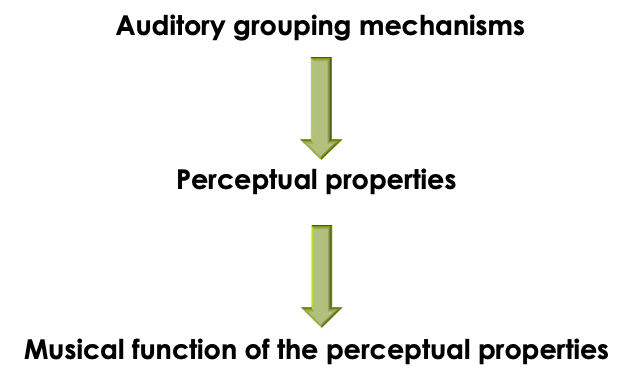
Auditory grouping gives rise to events from which perceptual properties are extracted, which then acquire musical functions within a given sonic context
Auditory grouping processes and the resulting perceptual qualities and corresponding orchestral effects. [Adapted from Goodchild and McAdams 2021, Fig. 1]
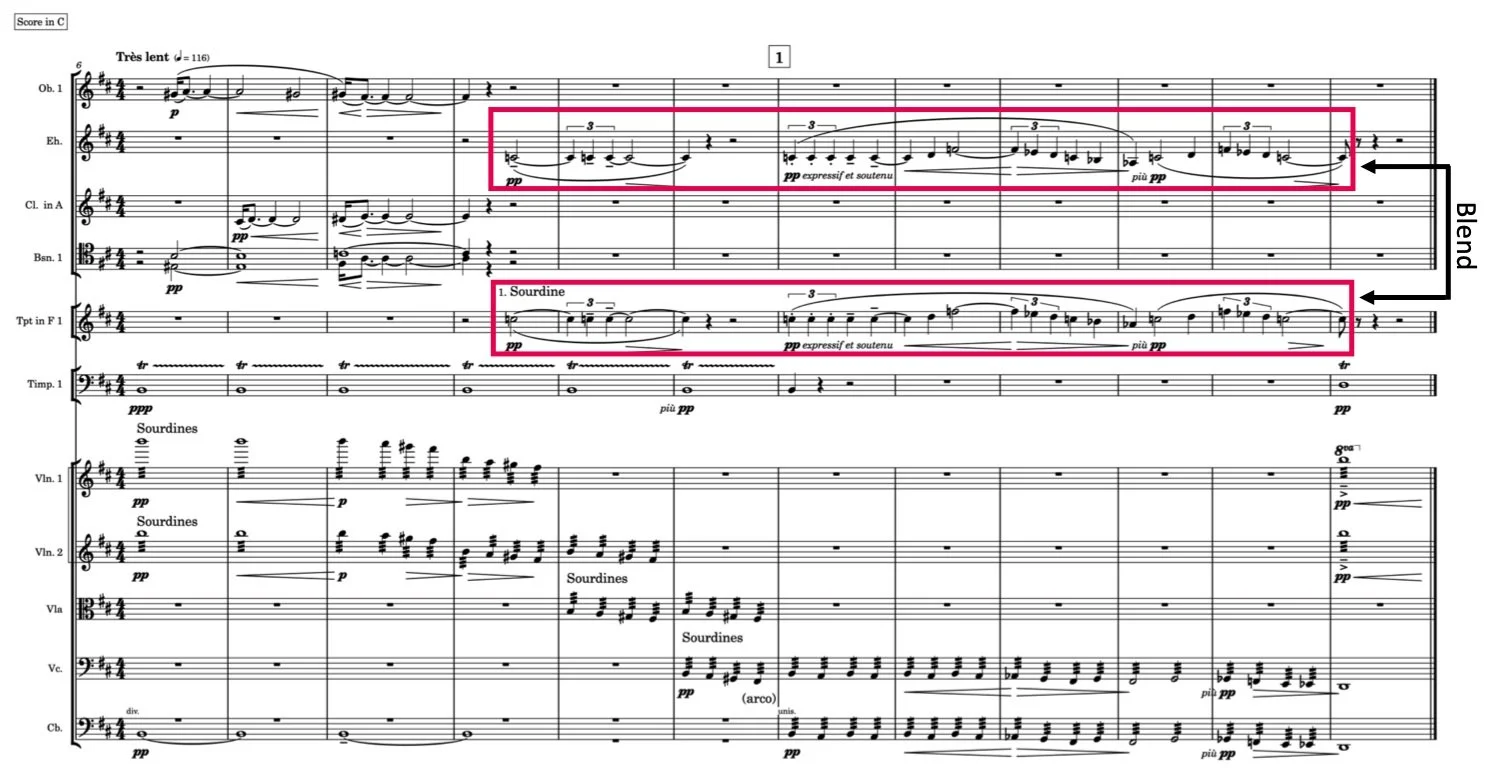
Timbral emergence (sustained, transforming): Schoenberg, Five Pieces for Orchestra op. 16, iii, mm. 1–11
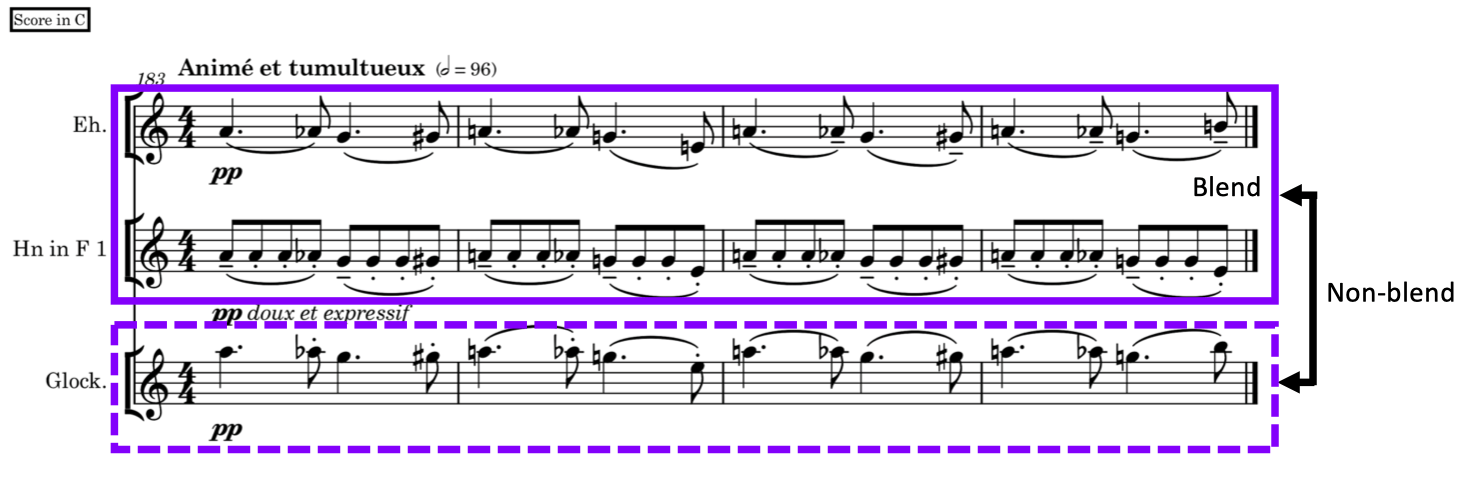
Timbral heterogeneity (punctuated): Tchaikovsky, Nutcracker Suite, op. 71a, i, mm. 181–182
Stream integration (stable). Ravel’s orchestration of Mussorgsky’s Pictures at an Exhibition, vi (“Samuel Goldberg and Schmuÿl”), mm. 1–8, Score in C
Stream integration (transforming): Reynolds, The Angel of Death, S section, mm. 364–373; [From Touizrar and McAdams 2019]
Stream segregation (stable) of co-equal single-instrument lines: Vaughan Williams, The Lark Ascending, mm. 88–94
Example 18. Stream segregation (stable) of blended streams: Borodin, In the Steppes of Central Asia, mm. 210–218
Stream segregation (transforming) of blended streams: Stravinsky, Quatre Etudes, iv (Madrid), mm. 93–94
Stratification (transforming) in three layers: Borodin, In the Steppes of Central Asia, mm. 27–42]
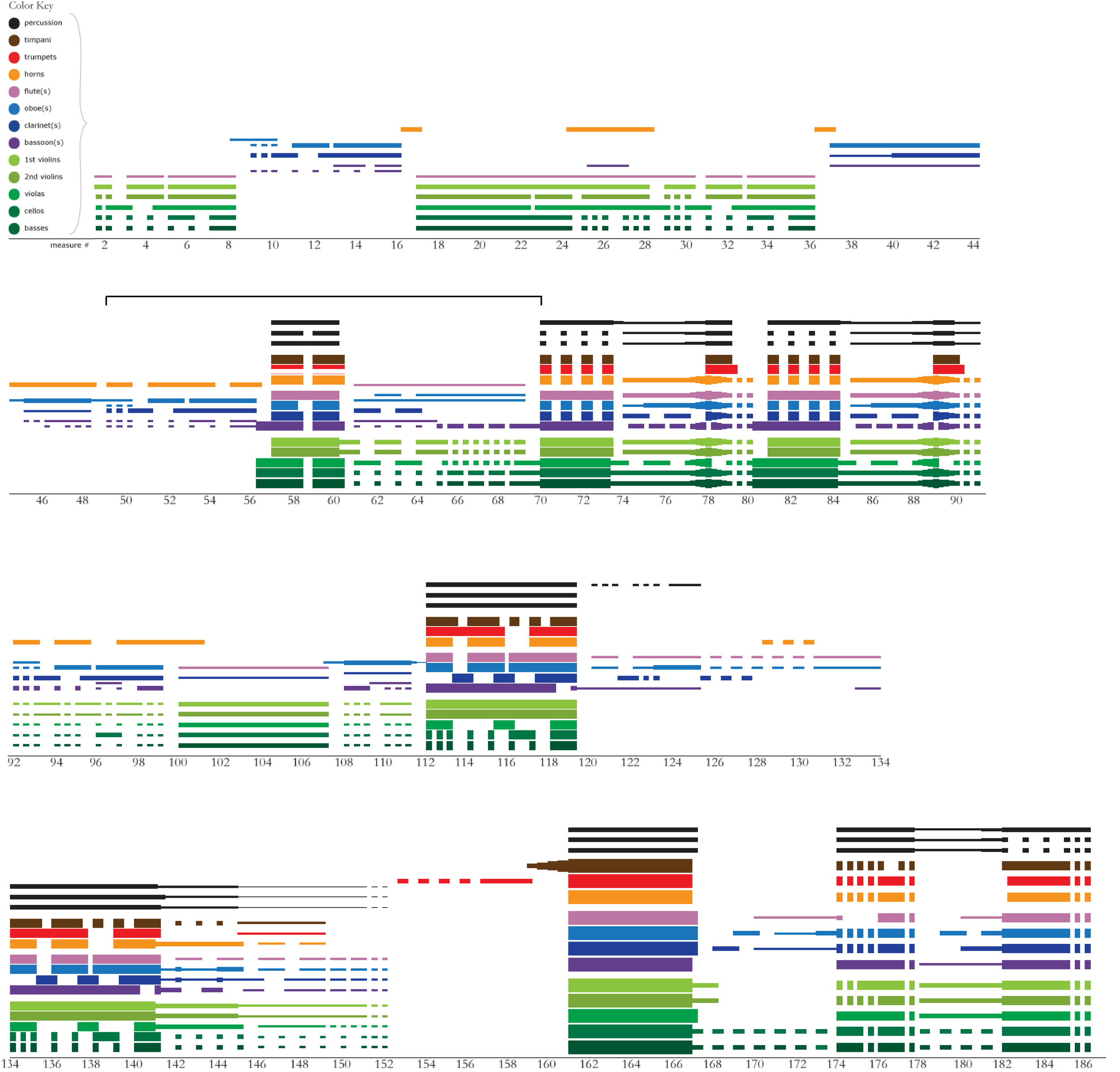
Sectional boundaries: Dolan’s (2013b) orchestral graph of Haydn, Symphony no. 100, ii. Colors represent different instruments and the line thickness corresponds to notated dynamics.