
TOGE | MTO Example 27. Sectional boundaries: Dolan’s (2013b) orchestral graph of Haydn, Symphony no. 100, ii. Colors represent different instruments and the line thickness corresponds to notated dynamics. The instruments are arranged with strings at the bottom followed by woodwinds, brass, and percussion. The horizontal bracket over the second panel indicates the measures included in:
Audio example 22 (mm. 49–70) (from Dolan 2013b, used with permission) [simulation from OrchPlayMusic Library]
Score-following Video
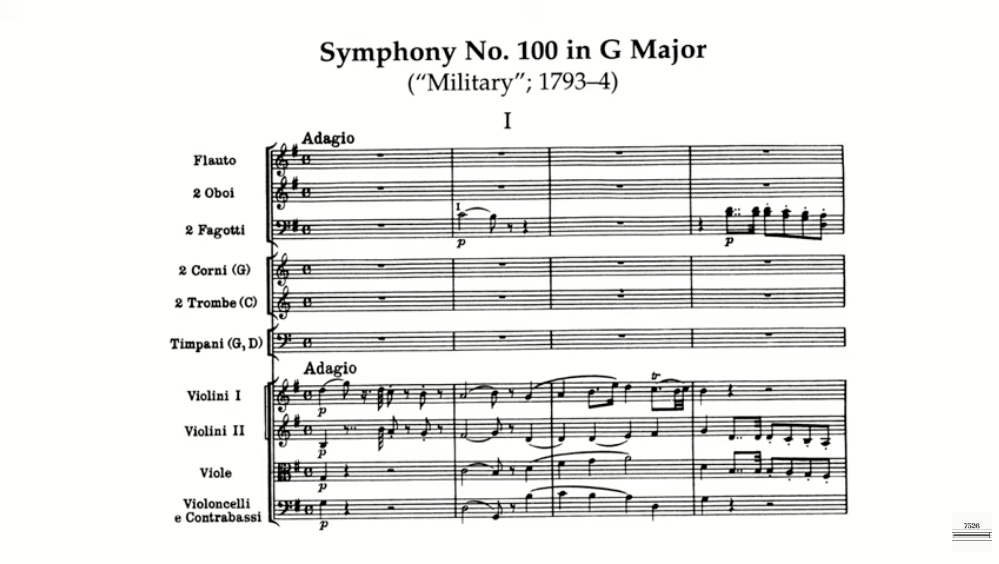
All Examples
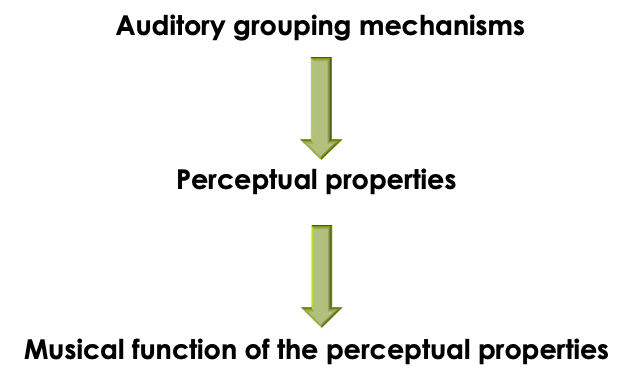
Auditory grouping gives rise to events from which perceptual properties are extracted, which then acquire musical functions within a given sonic context

Auditory grouping processes and the resulting perceptual qualities and corresponding orchestral effects. [Adapted from Goodchild and McAdams 2021, Fig. 1]


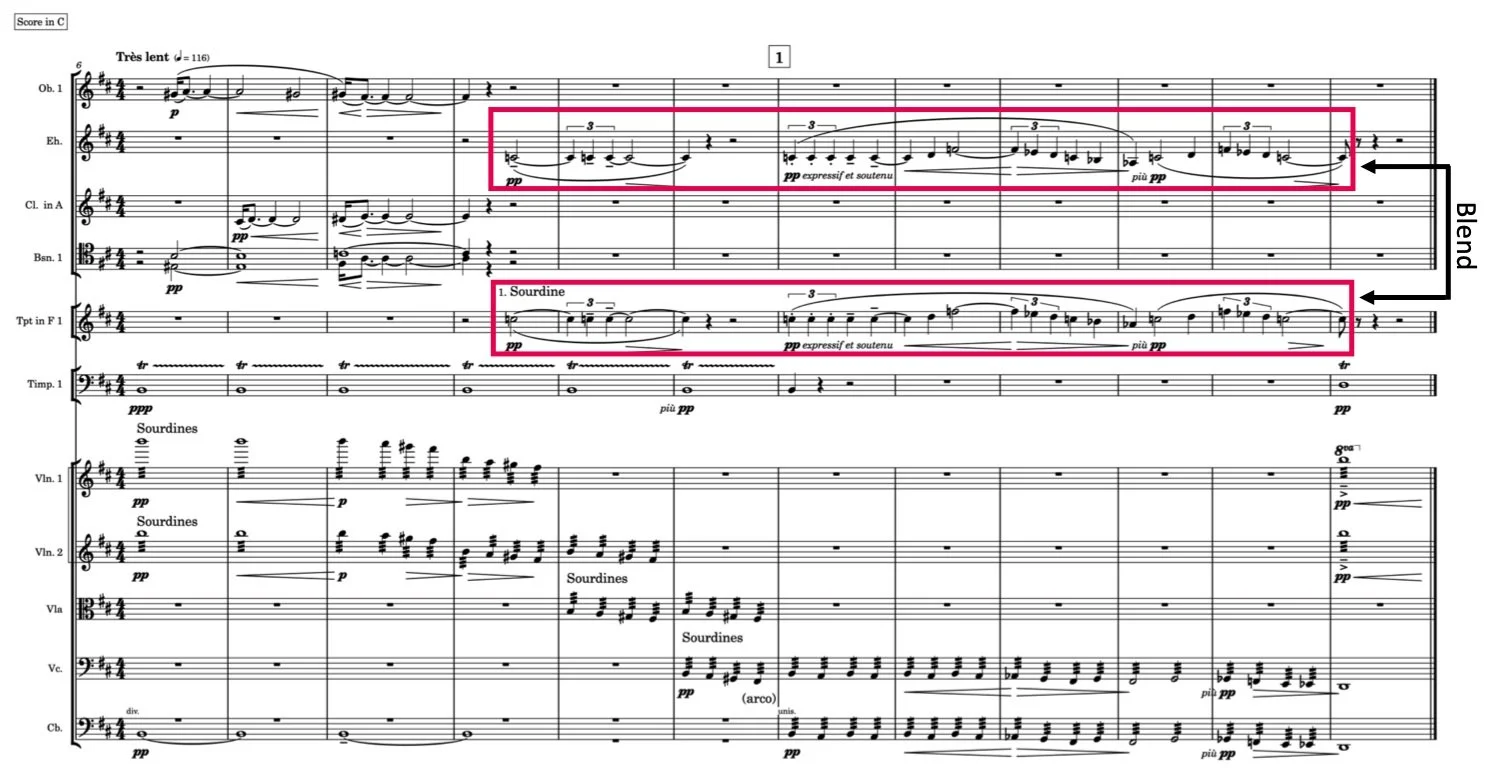

Timbral emergence (sustained, transforming): Schoenberg, Five Pieces for Orchestra op. 16, iii, mm. 1–11
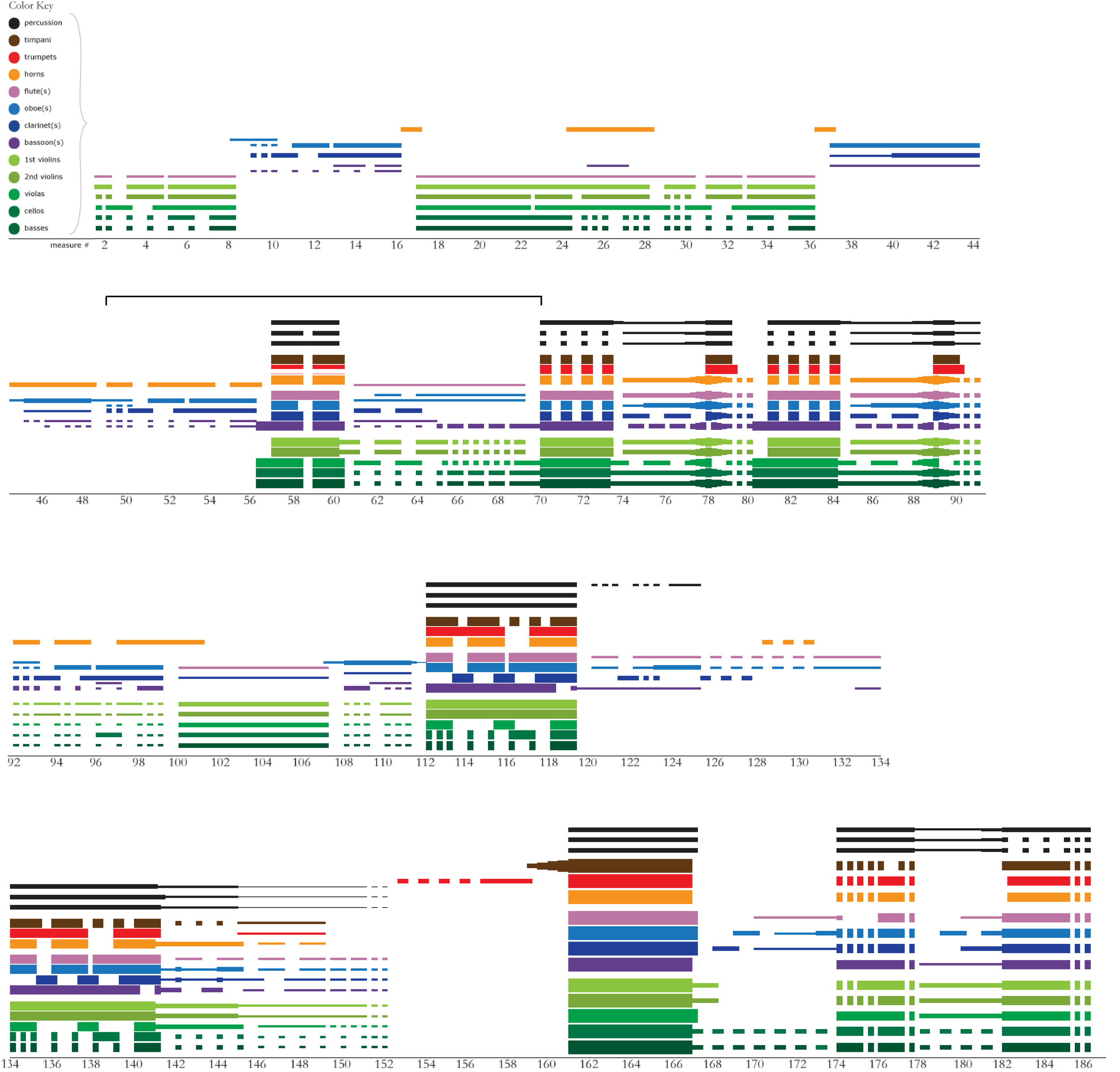
Sectional boundaries: Dolan’s (2013b) orchestral graph of Haydn, Symphony no. 100, ii. Colors represent different instruments and the line thickness corresponds to notated dynamics.
