Explore our collection of bassoon-related research. Discover insights from researchers with the Analysis, Creation, and Teaching of Orchestration Project, along with recommended external resources.
New Content
Woodwinds are not usually called upon to evoke the sensuous beauty of strings, the heroic grandeur of brass, or the visceral power and splashy color of percussion. Their role in the orchestra is possibly the most subtle and personal of all the instrumental choirs. Developing an appreciation for the special qualities they contribute and discovering techniques for making the most of the timbral resources they provide may be the most important lessons an orchestrator can learn.
Since the members of the woodwind section have such individually distinct timbres, the choices of chord voicings, doublings and octave placements in this section have a particularly notable impact.
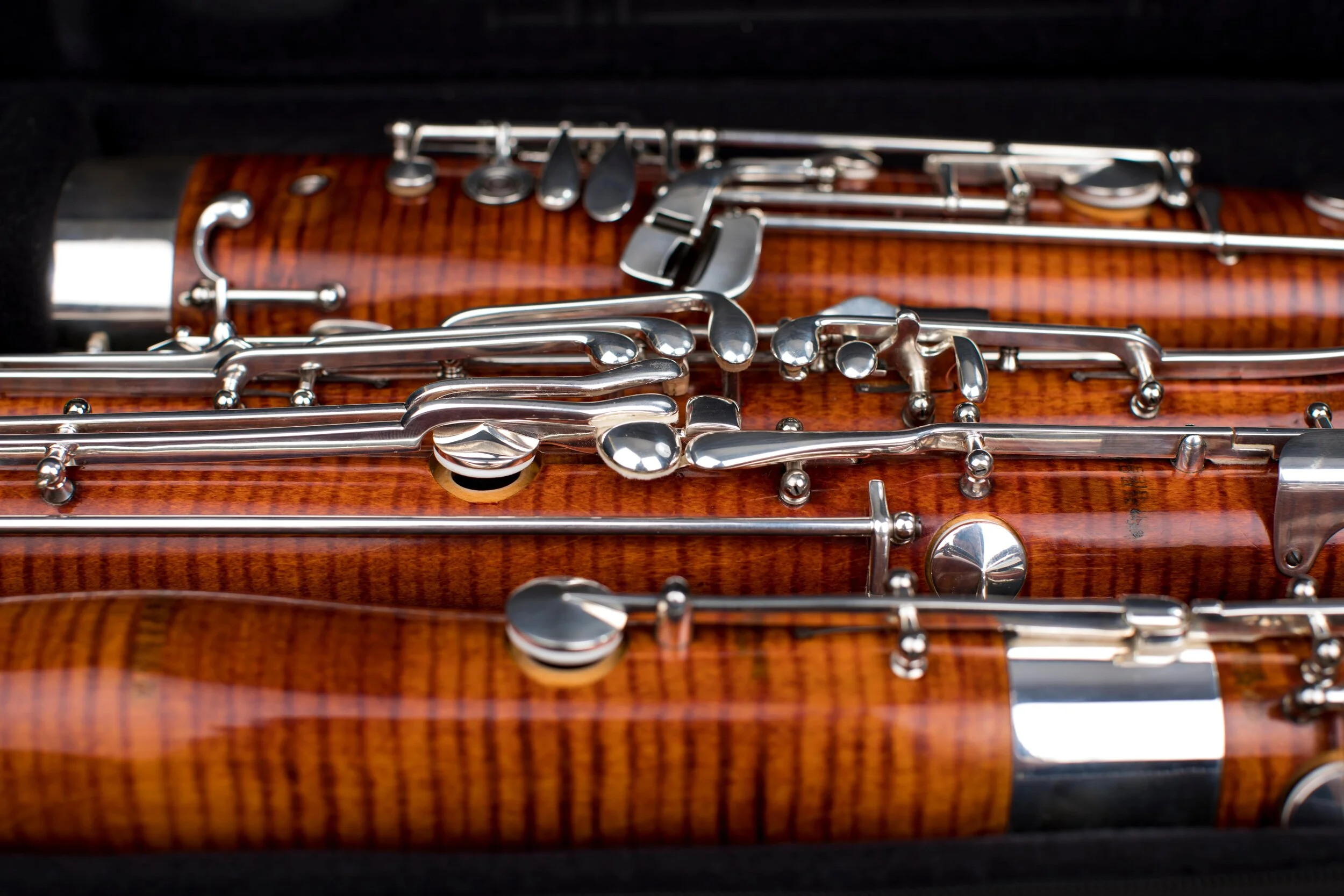
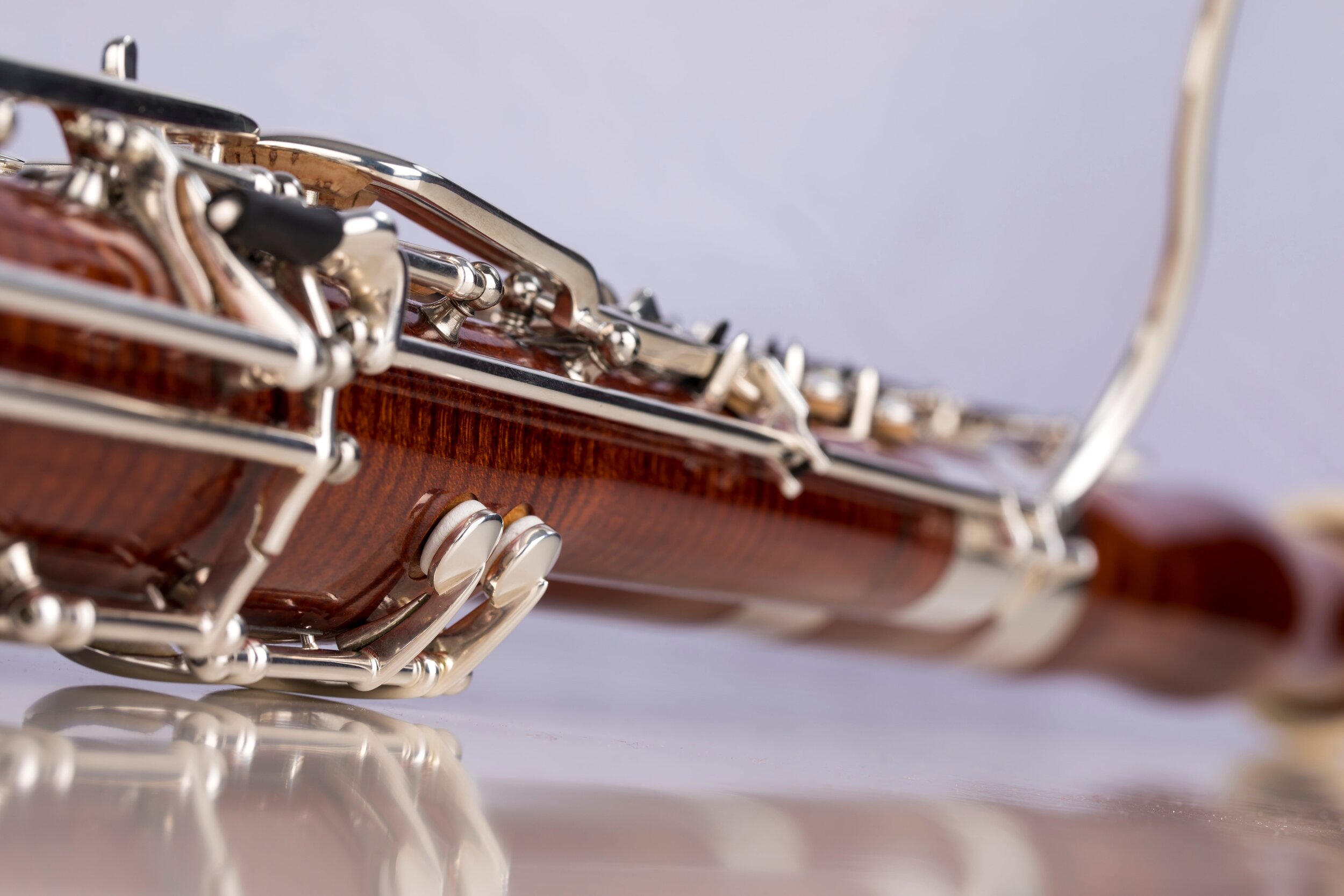
The bassoon family is limited to the bassoon and contrabassoon. Since these are double reed, conical bore instruments, basic acoustics might suggest that they should be included in the oboe family (or that oboes be included in the bassoon family since bassoons arguably arrived first). The sound quality of bassoons, however, differs significantly enough from the oboes to merit a family of their own.
Quick Links — Resources
From ACTOR Partners
“The aim of The Orchestra: A User's Manual is to provide information about the orchestra, orchestration, composition and instruments, for the benefit of anybody with an interest in the subject.”
“Like its cousins the oboe and English horn, the sound of a bassoon is produced by vibrations formed by the player blowing through a double reed fixed to a long, curved metal tube called a bocal, which connects the reed to the body of the instrument.”