
Tchaikovsky | Symphony No. 6 | Ex. 16
Learn About Orchestration | Cahiers d’orchestration | L'équilibre et le contraste | Examples
Tchaikovsky | Symphony No. 6, iii| Ex. 16
Exemple 16 : Contraste spectral cordes-bois
Example 16: Spectral contrast between strings and woodwinds
Figure 16. Tchaïkovski, 6ème symphonie, 3ème mouvement, début. © Dover Publications, 1997
Ex. 16: 28:36
Score following video

All Examples

Extreme Orchestration: Tchaikovsky's quintessential cantabile horn solo, showcases masterful variations in color, dynamics, and articulation, all within an ideal upper register.

The example showcases the piccolo's extraordinary brightness and lightness in a very high range.
One of three examples demonstrating the flute's remarkable agility, fluidity, and sparkling brilliance, all while playing soft and delicate. No. 10, Volière (Aviary), mm. 6-15 (rehearsal 1)

One of three examples demonstrating the flute's remarkable agility, fluidity, and sparkling brilliance, all while playing soft and delicate (rehearsal C).

One of three examples demonstrating the flute's remarkable agility, fluidity, and sparkling brilliance, all while playing soft and delicate, mm. 209-212 (rehearsal letter G).

The excerpt features a flute solo that highlights the instrument's rich tone in its lower register, supported by a delicate accompaniment which gradually increases in complexity and depth as the flute melodic line rises in pitch, from mm. 21-30 (rehearsal 2)

This example showcases the flute's expressive and lyrical qualities across its entire range. From the 4th movement, mm. 89-105

This passage, written in the flute's optimal tessitura above the staff, allows the instrument to shine with its singing tone, crisp articulation, brilliant passagework, and full dynamic range, easily projecting over the orchestra. From the 4th movement, mm. 170-200

A dramatic peak achieved by contrasting two sections of the orchestra

Extremely rapid shifts in contrast
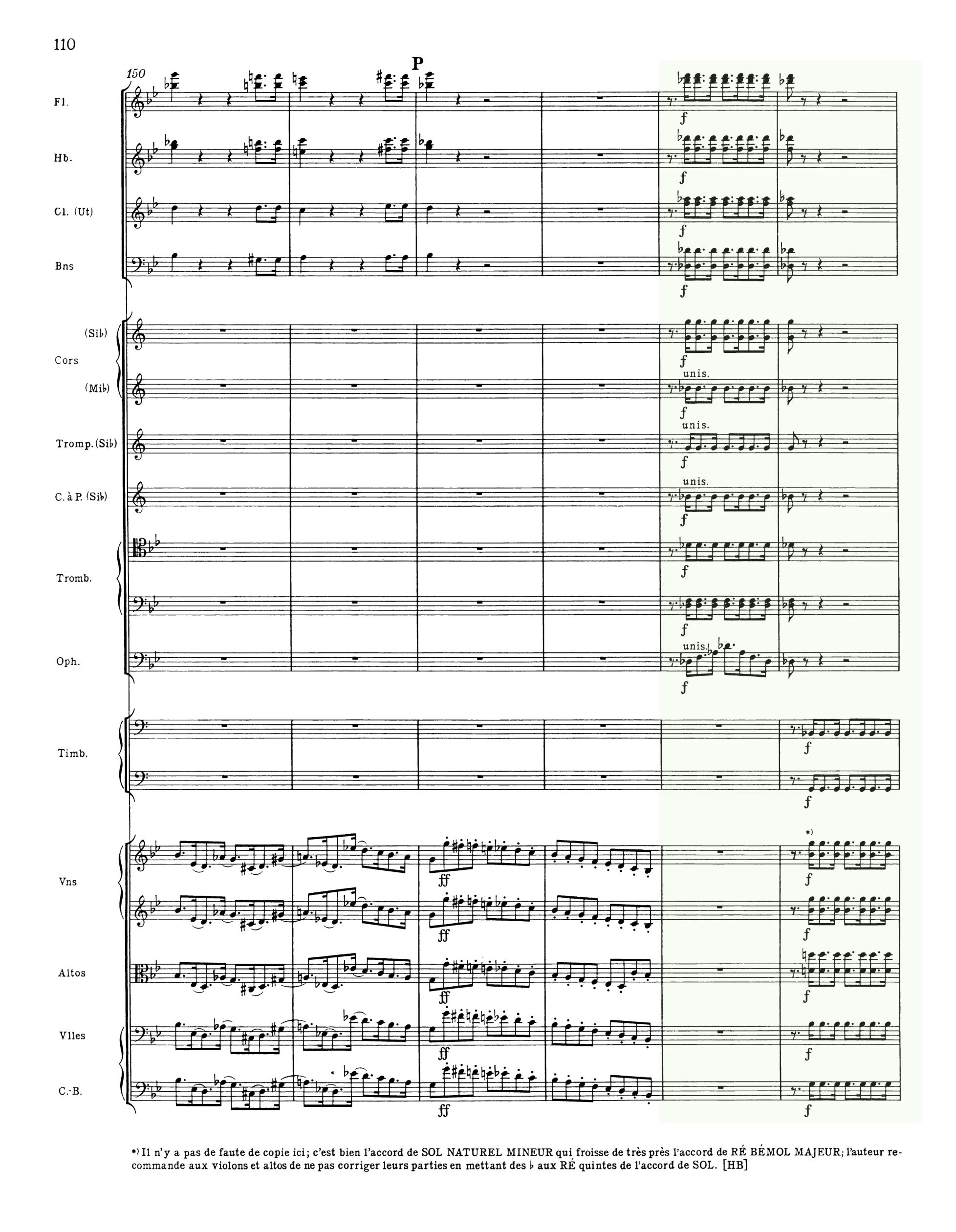
Increase in the frequency of contrasts

Clean transitions with no overlap between consecutive scenes

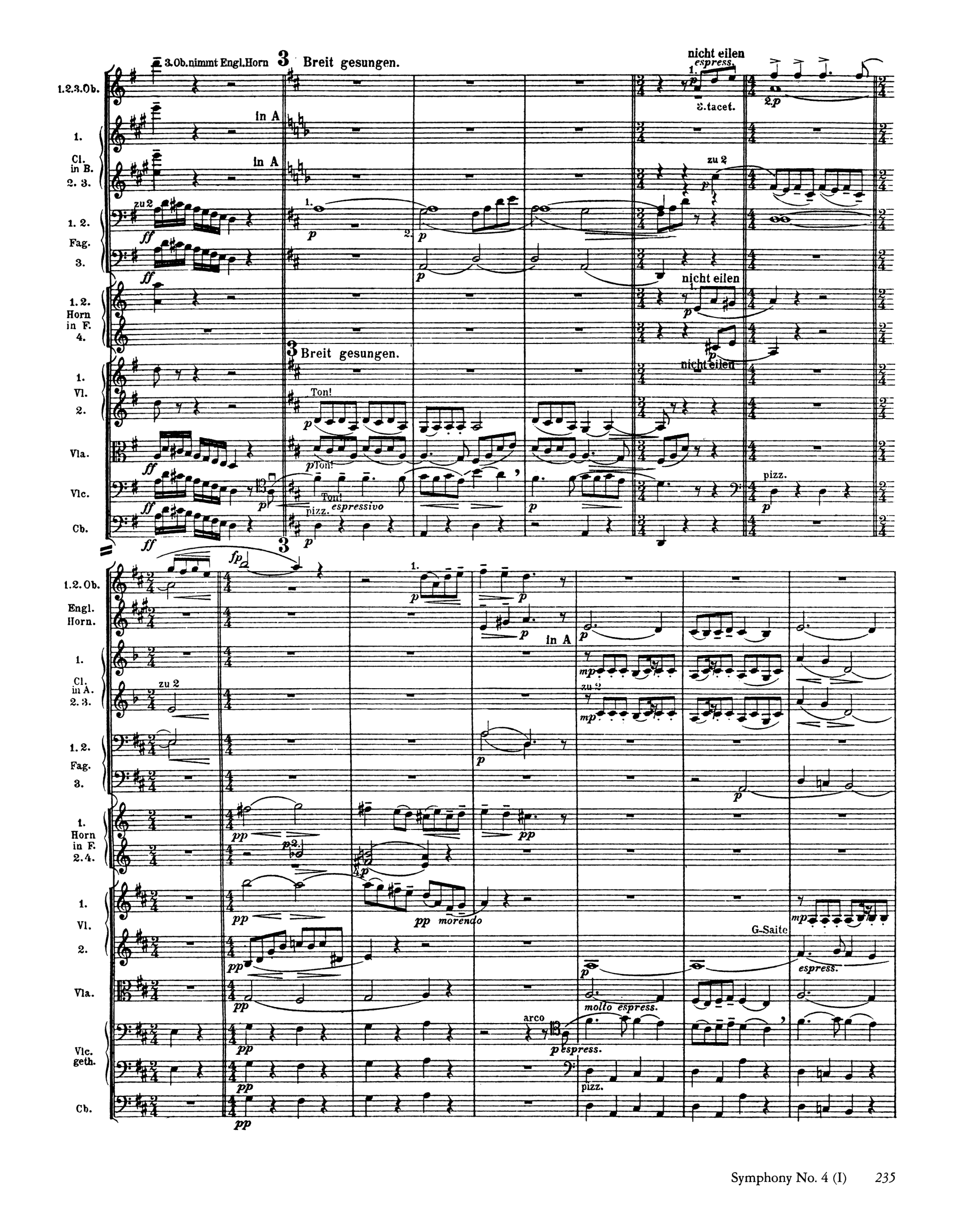
Sequencing through a cross-faded and blended transition
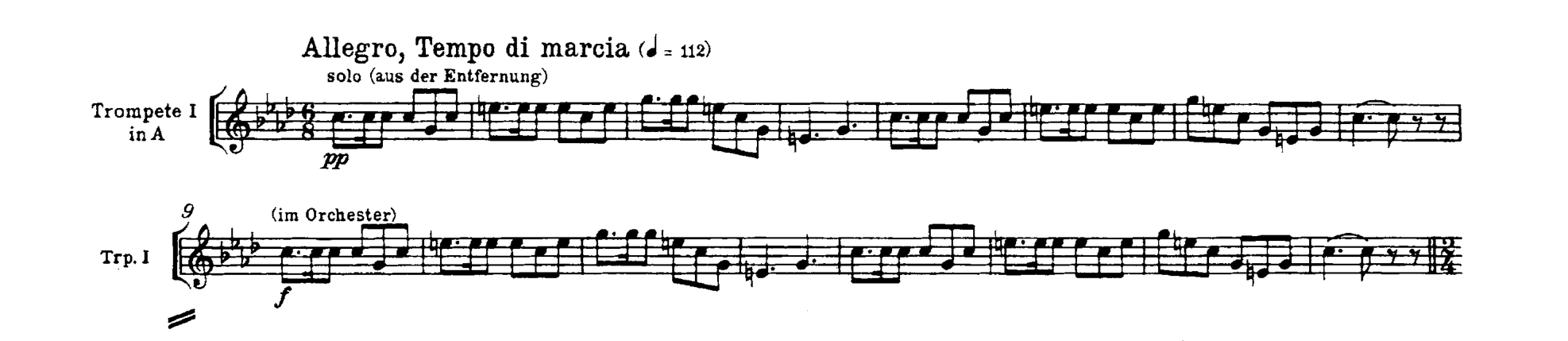
The color remains balanced. Only the spatial quality is contrasted.
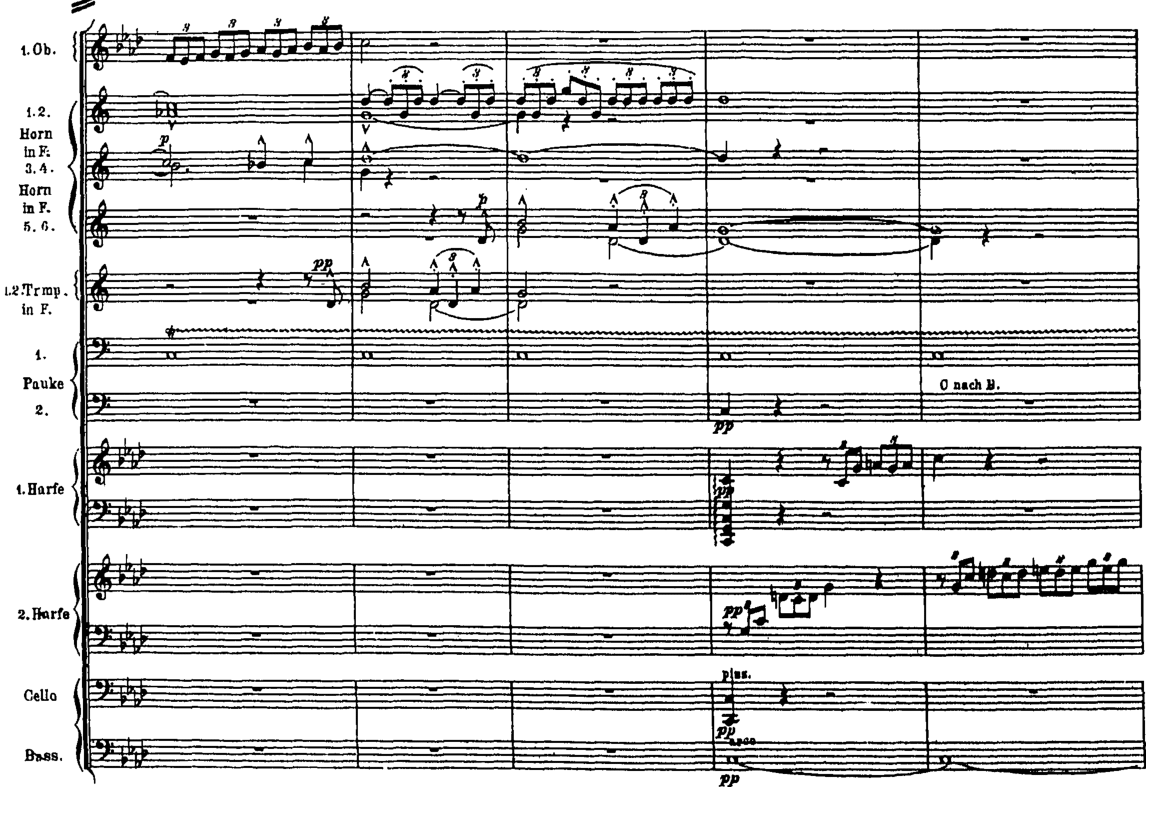
Balance of tension between two different instruments.

Dramatic dynamic contrast achieved through the recurring use of a single musical motif

Recreating the near-far effect

Parallel construction of a crescendo and an echo effect

Spatial sweep across the string sections, traversing all the music stands. Panning effect.

Achieving contrast solely through spatial means while maintaining balance in all other musical parameters.

Alternation between woodwinds and strings in spectral balance on the same chord

Spectral contrast between strings and woodwinds

Example of antiphony in a polychoral work from the Renaissance.

Antiphonic structure created by the alternation between winds and strings. 3rd mov., mm. 99-112

Responsorial structure created by the contrast between two instrumental densities.

Contrast between two instrumental densities: 2 string sections and a solo bassoon.

Contrast through the textural treatment of a melodic line.

Inverse relationship between polyphonic density and instrumental density.